
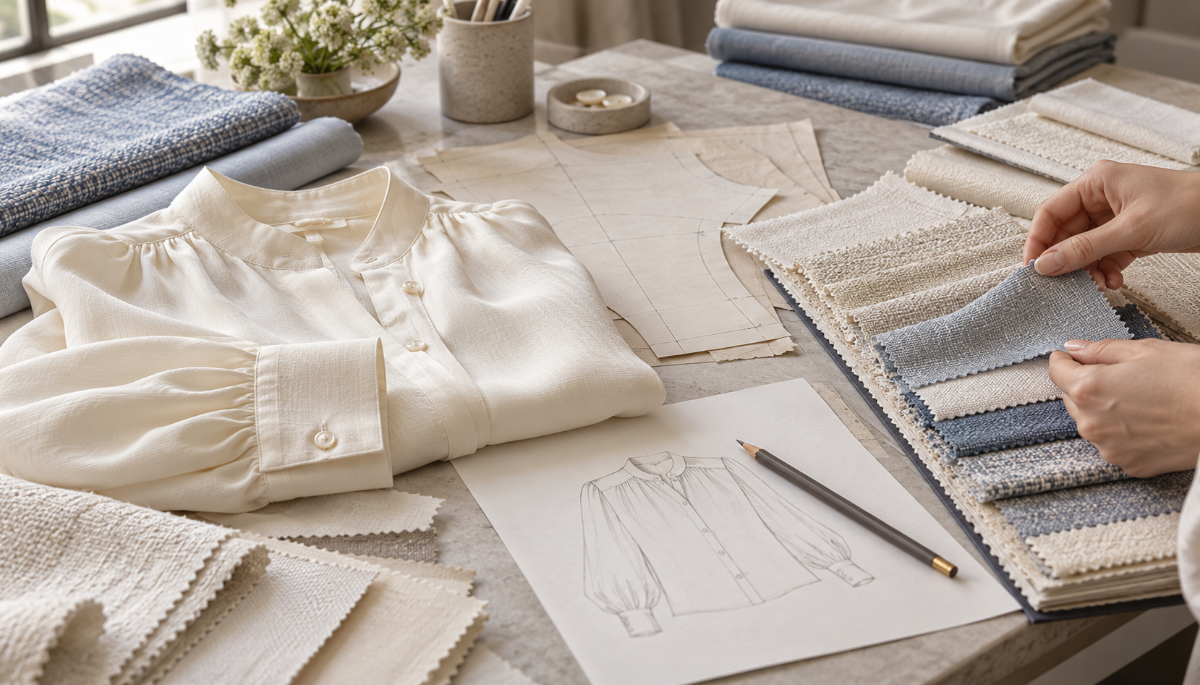
How to Prepare a Tech Pack for Woven Womenswear
A successful womenswear sample starts with clear information. Before developing a dress, blouse, skirt or pair of trousers, your manufacturer needs to understand the intended silhouette, materials, measurements and construction details.
A tech pack brings these requirements together in one document. It gives your brand and manufacturing team a shared reference for sampling, feedback and production.
You do not need every detail finalised before making an initial enquiry. However, clearly separating confirmed requirements from decisions still under review helps keep development on track.
- Identify the Style and Version
Start with the brand name, style name, style number, sample size and document date. Add a version number so everyone can identify the current instructions.
Keep the same style number across your sketches, measurement sheets, sample comments and emails. When you revise the design, issue an updated version and summarise what has changed.
- Show the Design Clearly
Include front and back technical sketches, with close-up drawings for details that need explanation.
For woven womenswear, these might include:
Necklines, collars and button plackets. Sleeve shapes, cuffs and openings. Waistbands, darts, pleats and gathers. Pockets, fastenings, linings and hems.
Reference photographs can help communicate a silhouette or finish, but explain which features matter. A picture alone may not show how a garment should be constructed.
For example, if you want a gathered sleeve with a clean shoulder line, show where the fullness should sit rather than simply describing it as a “volume sleeve”.
- Define the Fabric and Trims
Create a bill of materials: a list of the fabrics, linings, interlinings, threads, fastenings and labels required for the style.
For the main fabric, record the composition, weight and colour reference where known. Describe the intended hand feel, drape, opacity and stretch requirements.
If you have not selected a fabric, explain the effect you need. A fluid blouse and a structured shirt may require very different materials, even when their sketches look similar.
Include trim dimensions, colours and placement where relevant. Mark items that still need sourcing or approval rather than treating them as final choices.
- Provide Measurements and Measuring Methods
Include a measurement specification for the sample size and identify how each measurement should be taken.
Clearly distinguish between body measurements and finished garment measurements. Also state whether a measurement is a flat width or a full circumference, and use one consistent unit throughout the document.
Key measurements depend on the garment. A blouse may need chest width, shoulder width, body length and sleeve length. Trousers may require waist, hip, rise, inseam and leg opening measurements.
Agree measurement tolerances with the manufacturer based on the style, fabric and construction. If size grading is not yet available, identify the intended size range and confirm who will develop and approve it.
- Explain Construction and Finishing
Describe the details that affect both appearance and workmanship.
These can include seam finishes, visible topstitching, hem construction, lining attachment, fastening placement and print matching.
For a printed skirt, for example, specify whether a border motif should run along the hem and whether its placement needs to remain consistent across sizes.
Avoid relying only on phrases such as “premium quality”. Explain the particular finish you expect, using detail photographs or an approved reference sample when helpful.
- Share the Commercial Requirements
Alongside the tech pack, provide your estimated quantity per style and colour, target price and required delivery timing.
Clarify whether the date refers to sample completion, goods ready for shipment or arrival at your destination.
These details help the manufacturer assess material options and production feasibility. They should be discussed before sampling decisions create unnecessary cost or timing constraints.
- Record Sample Feedback in One Place
After reviewing a sample, consolidate your comments into one clear revision document.
Refer to the relevant sketch detail or measurement point, describe the issue and state the requested change. Annotated photographs can help explain fit or construction comments.
Identify which details are approved and which still need revision. Before bulk production, make sure the approved sample and the latest written specifications are consistent.
What If You Do Not Have a Complete Tech Pack?
You can begin a discussion with sketches, reference garments or photographs, together with your fabric preferences, size range and estimated quantities.
Be clear about what you already have and where you need development support. Pattern making, measurement specifications and technical documentation are separate tasks whose scope should be agreed with your manufacturing partner.
Discuss Your Womenswear Project
Lilian Apparel supports woven womenswear development and manufacturing, including fabric and trim sourcing, sampling, fit refinement and bulk production.
Share your available design information and project requirements so we can review the next steps together.
Share this article
